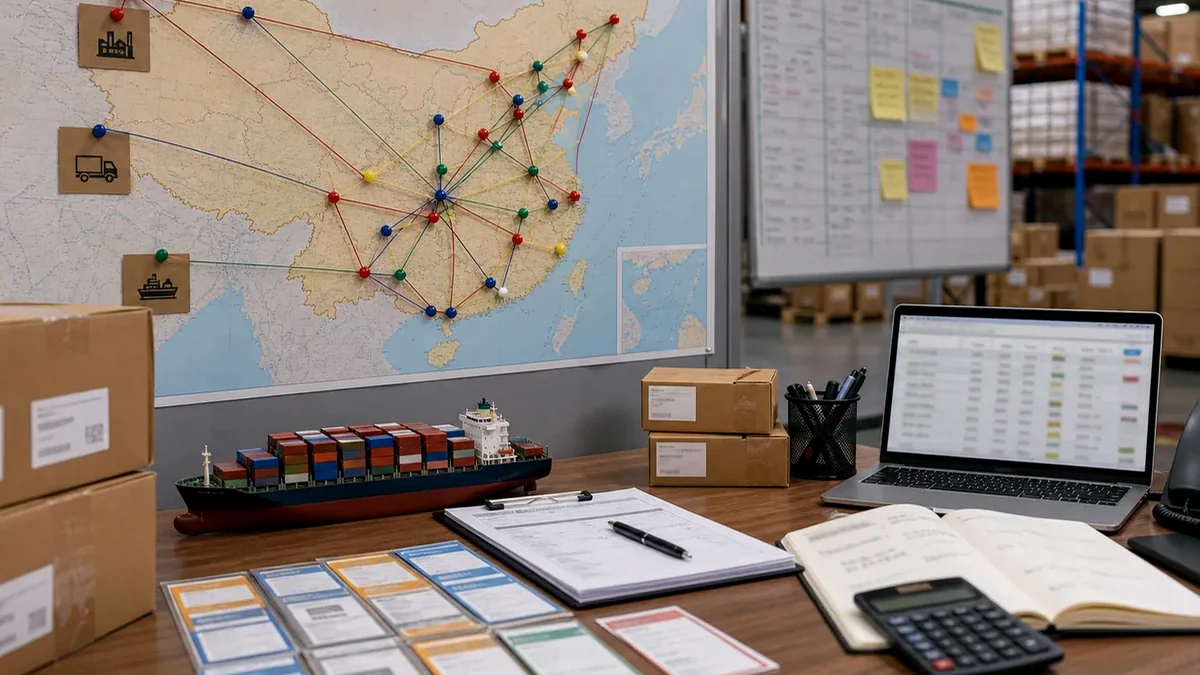
FBA shipping problems often begin before the truck arrives. The supplier packs the goods, the seller creates a shipment plan, and then the carton weight or dimensions do not match the labels. If the goods are already moving, fixing the mismatch becomes harder.
Carton data is not just warehouse paperwork. It affects freight quotes, FBA receiving, carrier acceptance, labels, customs documents, and delivery planning.
Measure cartons before labels are final
Ask the supplier or inspector to measure actual packed cartons, not estimated cartons. Record length, width, height, gross weight, carton count, and product quantity per carton. Then compare those numbers with the packing list and shipment plan.
For FBA preparation, read our internal IOR, DDP, label, and document checklist. DDPexpert’s China pre-shipment inspection guide explains how inspection evidence should be collected before cargo release.
Carton checks before pickup
- Actual carton dimensions match the shipment plan.
- Gross weight matches label and packing list data.
- FNSKU and carton labels are scannable and attached correctly.
- Carton strength is suitable for international freight.
- Photos show carton label placement on real cartons.
Connect carton data to customs documents
If the invoice, packing list, freight quote, and FBA shipment plan use different carton numbers, the buyer may face delays. One clean data set should be used across all documents.
For label-specific issues, our internal article on wrong labels and barcodes before shipment is still relevant. DDPexpert’s China freight forwarding guide helps connect carton data with quote accuracy.
Final recommendation
Before shipping to FBA, verify carton weight and dimensions with real packed-goods evidence. Do not approve pickup until labels, packing list, invoice, and freight quote all match.

